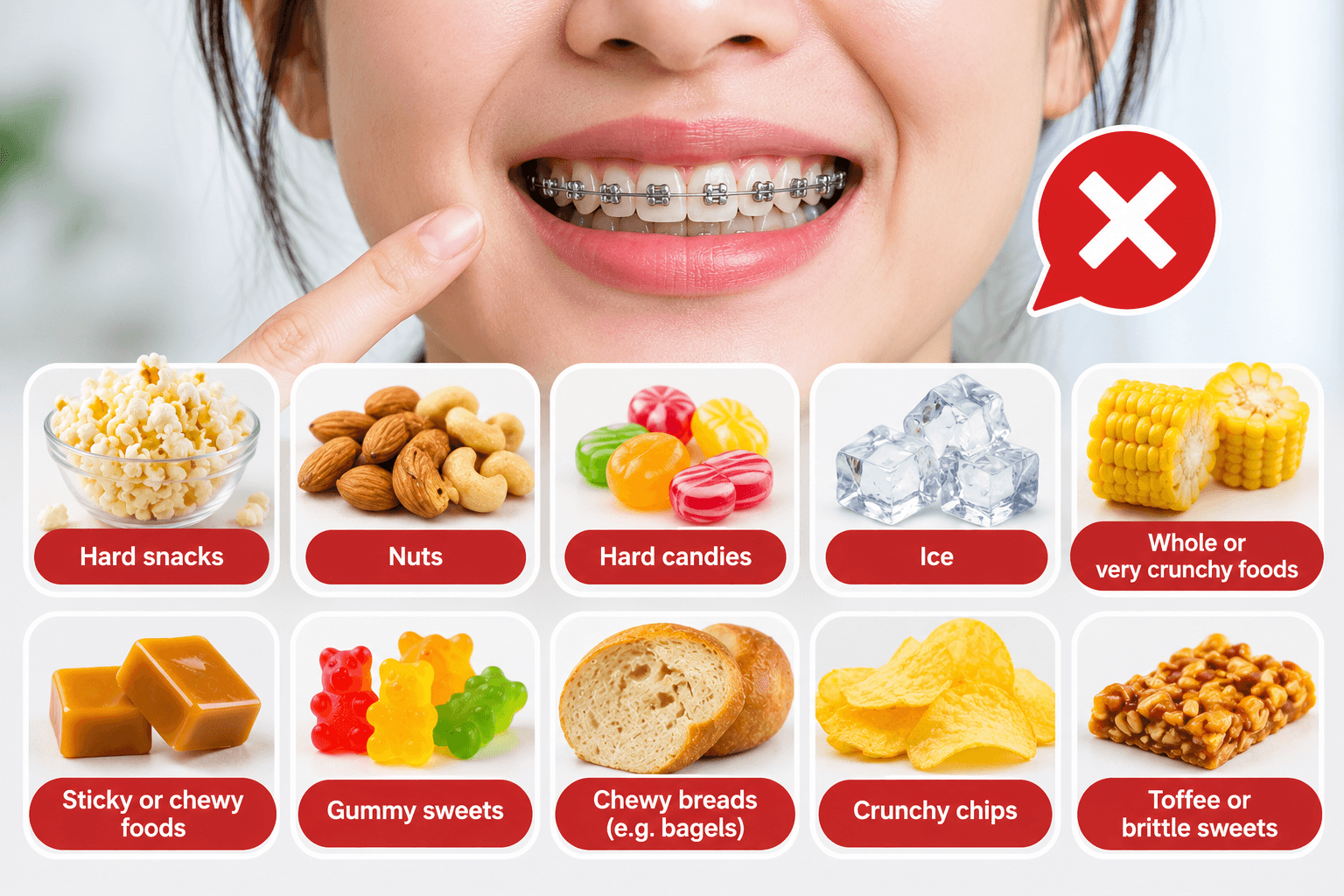
Knowing which foods to avoid with braces can help prevent broken brackets, bent wires and unnecessary discomfort during treatment. Hard, sticky, crunchy and chewy foods are generally best avoided because they can damage your braces or become trapped between the brackets and teeth.
So, what can you eat with braces? Soft foods such as porridge, rice, noodles, scrambled eggs, steamed fish, yoghurt and cooked vegetables are usually good choices. You can also continue enjoying many of your favourite meals by cutting food into smaller pieces or changing how it is prepared.
Whether you have just started wearing braces or are preparing for treatment, understanding what to eat and what to avoid can make everyday meals easier.
Why Does Your Diet Matter When Wearing Braces?
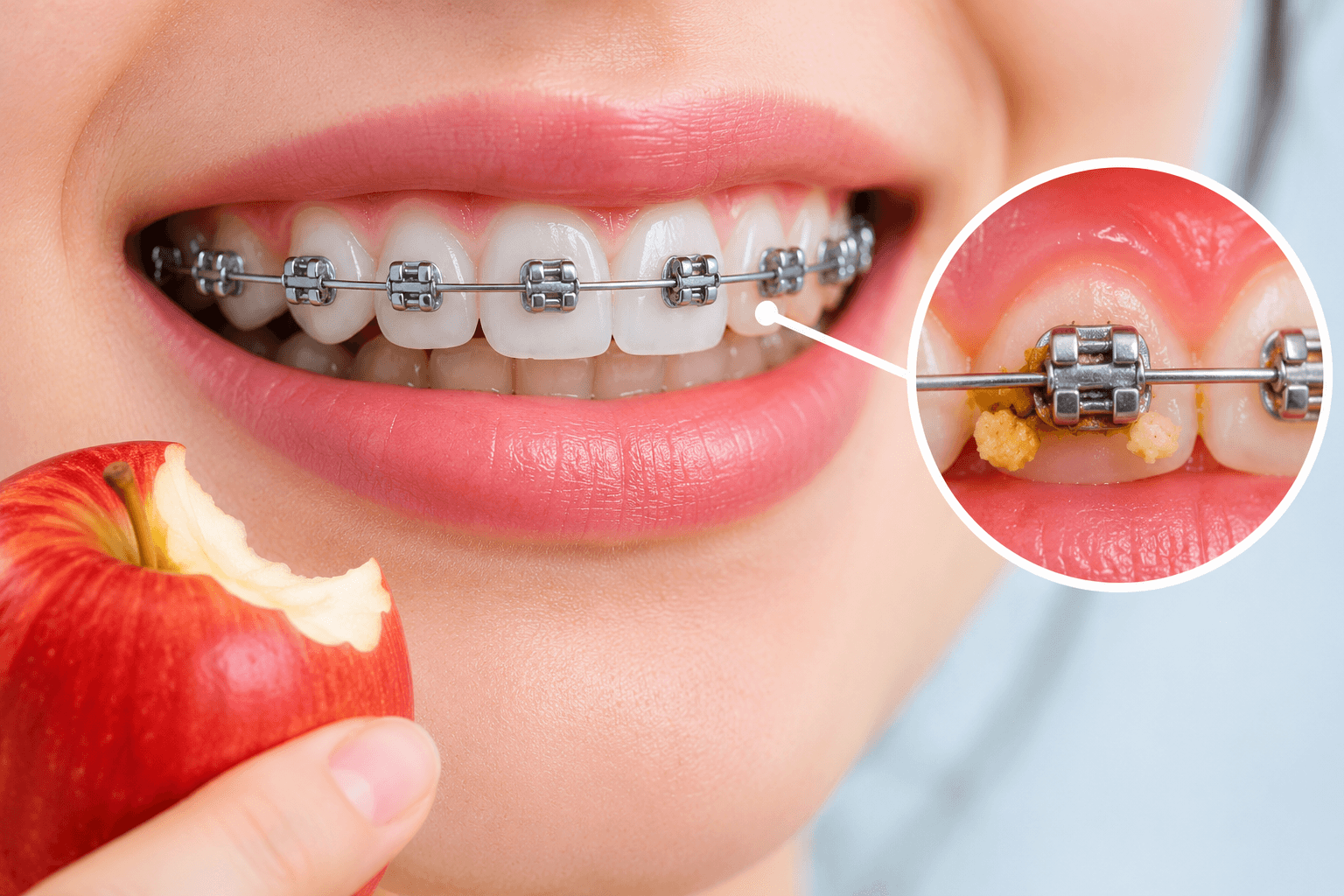
Braces use brackets and wires to apply controlled pressure that gradually moves your teeth into better alignment. Although these appliances are designed for everyday use, certain foods can damage their components.
Biting into something hard may loosen a bracket, while sticky food can pull on wires or become difficult to remove.
Food particles can also collect around braces, making cleaning more challenging. Without proper brushing and flossing, plaque buildup may increase the risk of tooth decay and gum problems.
Choosing suitable foods helps protect your braces while keeping your teeth and gums healthy throughout treatment.
Foods to Avoid With Braces
If you are wondering what not to eat with braces, the main rule is to avoid foods that require excessive biting force or can easily get caught around your brackets and wires.
1. Hard and Crunchy Foods
Hard foods place extra pressure on your braces when you bite or chew. This can cause brackets to loosen or wires to bend.
Common examples include nuts, popcorn, hard sweets, ice cubes, hard biscuits and very crunchy chips.
You should also avoid chewing ice, even without food, because the pressure can damage your braces. Instead, choose softer alternatives such as yoghurt, soft bread or ripe fruit. If you enjoy biscuits, select varieties that soften easily rather than hard, brittle ones.
2. Sticky and Chewy Foods
Sticky foods can cling to brackets and wires, making them difficult to clean. Some may also pull on orthodontic components while you chew.
Examples include chewing gum, caramel, toffee, gummy sweets and other sticky candies.
These foods may leave sugary residue around your braces, especially in areas that are difficult to reach with a toothbrush. For something sweet, consider yoghurt or soft fruit. Remember to clean your teeth afterwards to prevent food residue from remaining around your brackets.
3. Foods That Require Biting With Your Front Teeth
Some foods are not necessarily too hard to eat, but biting directly into them can place unnecessary force on your front brackets.
Whole apples, raw carrots, corn on the cob, crusty bread and meat attached to bones are common examples.
Fortunately, you do not always need to avoid these foods completely.
Cut apples into thin slices, cook carrots until soft and remove corn kernels from the cob. Chicken and other meats should also be removed from the bone and cut into manageable pieces.
These simple changes can help you enjoy a wider variety of foods without putting excessive pressure on your braces.
4. Sugary and Acidic Drinks
Food texture is not the only concern during braces treatment. Sugary and acidic drinks can also affect your dental health.
Soft drinks, energy drinks and sweetened beverages may increase the risk of tooth decay and enamel erosion, particularly when consumed frequently.
Brackets create additional areas where plaque can accumulate, making good oral hygiene especially important.
Water is the best everyday option. Plain milk can also be a suitable choice. If you occasionally consume a sugary or acidic drink, rinse your mouth with water afterwards and maintain your usual brushing routine.
What to Eat With Braces
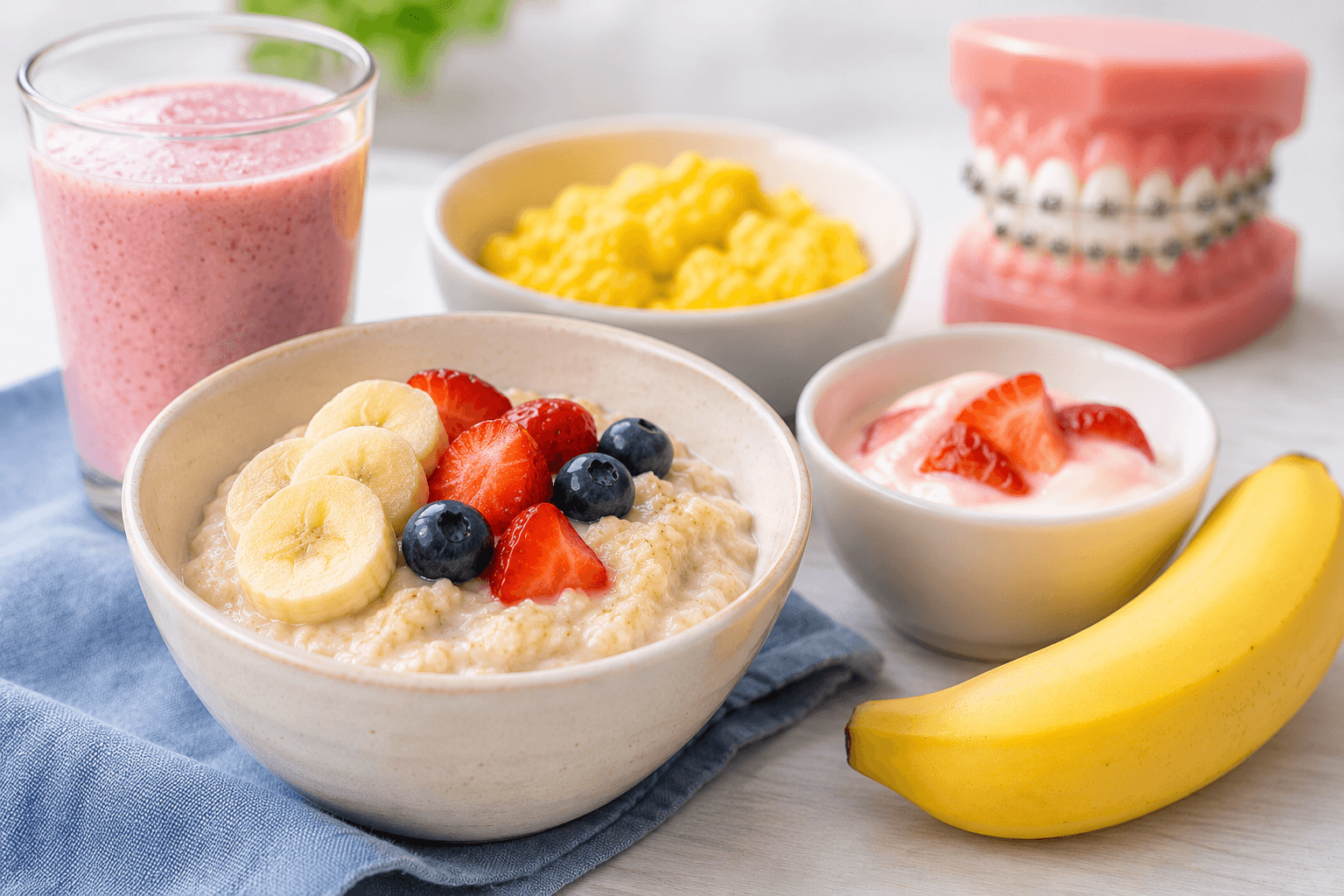
You can still enjoy a balanced and satisfying diet while wearing braces. The key is choosing foods that are easy to chew and gentle on your teeth.
This is especially helpful during the first few days after getting braces or following an adjustment.
1. Soft Meals and Carbohydrates
Soft meals are often the most comfortable option when your teeth feel tender.
Porridge, soft rice, pasta, noodles, mashed potatoes and oatmeal are generally easy to eat without placing excessive pressure on your brackets.
For a familiar Malaysian meal, chicken porridge or a bowl of soft noodles can be a convenient choice. Allow hot meals to cool to a comfortable temperature, particularly if your mouth feels sensitive.
2. Protein-Rich Foods
Protein remains an important part of a balanced diet during orthodontic treatment.
Scrambled eggs, tofu, steamed fish, tender chicken and soft-cooked beans are useful options. Choose cooking methods that keep food moist and tender. For example, steamed chicken cut into small pieces may be easier to chew than tough, grilled meat.
Avoid biting directly into bones or particularly chewy cuts of meat.
3. Fruits and Vegetables
You do not need to stop eating fruits and vegetables simply because you have braces.
Soft fruits such as bananas, papayas and ripe mangoes are usually comfortable to eat. Firmer fruits should be cut into smaller pieces.
For vegetables, consider steaming, boiling or cooking them until tender. Carrots, broccoli and leafy vegetables can all be included in your meals when prepared appropriately.
This allows you to maintain a varied diet without relying entirely on soft, processed foods.
4. Braces-Friendly Snacks
When you feel hungry between meals, choose snacks that are gentle on your braces.
Plain yoghurt, soft cheese, bananas, smoothies without hard pieces and soft sandwiches are practical choices.
Avoid snacks containing whole nuts, sticky toppings or hard ingredients that are difficult to chew. Try to limit frequent sugary snacking, as keeping teeth clean around orthodontic brackets can already require extra attention.
Can You Still Eat Your Favourite Malaysian Foods With Braces?
Yes, many Malaysian dishes can still be enjoyed with braces, provided you pay attention to their texture and preparation.
Nasi lemak: Soft rice and eggs are generally suitable. Avoid crunchy ikan bilis and peanuts, and be mindful of hard ingredients in sambal.
Chicken rice: Choose tender, boneless chicken cut into small pieces. Avoid biting directly into bones.
Mee soup: Soft noodles and tender ingredients are usually easier to manage, particularly after an adjustment.
Roti canai: Softer portions may be manageable, but avoid overly crispy sections when your teeth feel sensitive.
You do not necessarily need to change your entire diet. Small adjustments to portion sizes, cooking methods and chewing habits can make familiar meals more braces-friendly.
How Long Does It Take for Braces to Stop Hurting?
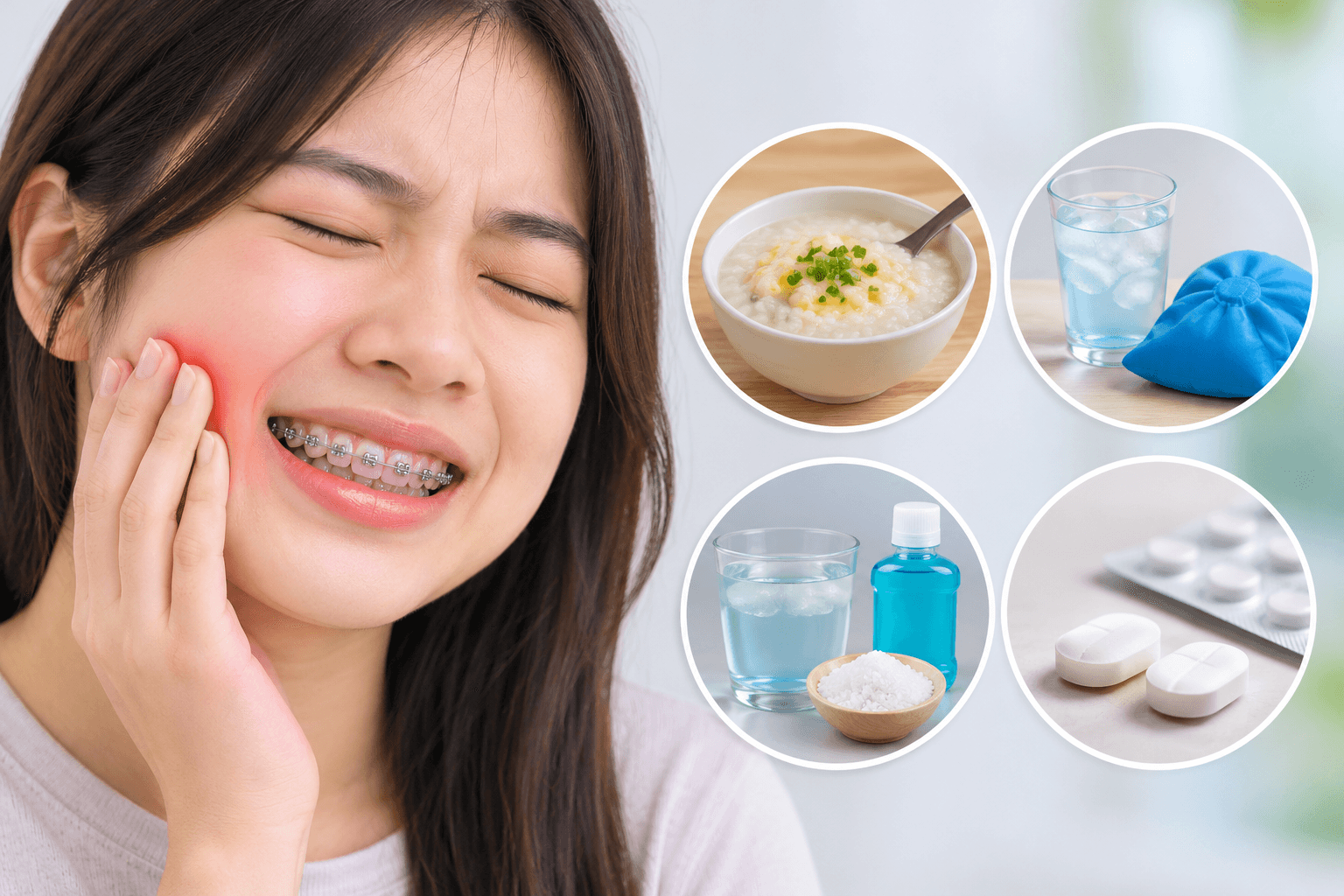
Mild soreness is common after braces are first fitted or adjusted. Many patients notice that the discomfort gradually improves within a few days, although the experience varies.
This happens because braces apply pressure to move your teeth. You may also notice some irritation while your cheeks and lips adjust to the brackets.
During this period, choose soft meals that require minimal chewing, such as porridge, soup, yoghurt and scrambled eggs. Avoid forcing yourself to eat hard foods when your teeth are tender.
If you experience severe pain, worsening discomfort, swelling or a wire poking your mouth, contact your dental clinic for advice rather than waiting for your next appointment.
Tips for Eating and Caring for Your Braces
Besides knowing which foods to avoid, a few daily habits can help protect your braces.
Cut Food Into Smaller Pieces
Avoid biting directly into large or firm foods. Cutting meals into smaller portions reduces the pressure placed on your front brackets.
Chew Slowly and Carefully
Take smaller bites and chew gently using your back teeth. This is particularly useful when your teeth are sensitive after an adjustment.
Clean Your Braces After Eating
Food can become trapped around brackets and wires. Brush carefully with fluoride toothpaste and clean between your teeth daily.
If you cannot brush immediately after a meal, rinsing with water can help remove loose food particles.
For more guidance, read our article on how to brush your teeth with braces.
Attend Your Scheduled Dental Appointments
Regular appointments allow your dental provider to monitor tooth movement, check orthodontic components and identify any problems.
If a bracket becomes loose or a wire breaks, inform your dental clinic promptly.