
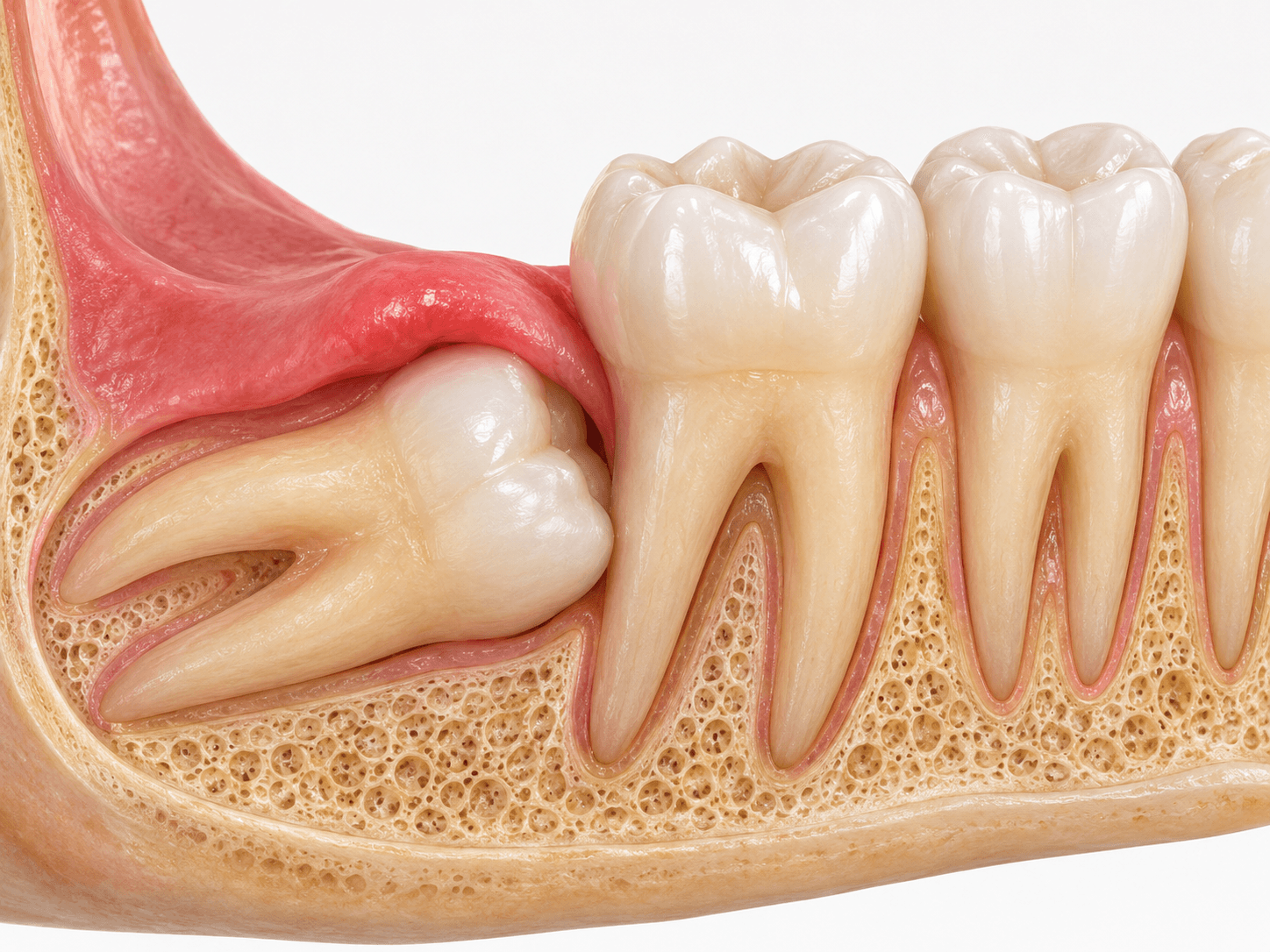
Impacted wisdom teeth are third molars that cannot grow into their normal position because they are blocked by the gums, jawbone or neighbouring teeth. Some remain hidden without causing problems, while others lead to pain, swelling, infection or damage to nearby teeth.
Not all impacted wisdom teeth need to be removed. Dentists usually recommend treatment when there is repeated infection, persistent pain, tooth decay or damage to surrounding structures. An examination and dental X-ray can help determine whether removal is necessary.
If you have discomfort at the back of your mouth, understanding the signs and types of impacted wisdom teeth can help you decide when to seek dental care.
What Are Impacted Wisdom Teeth?
A wisdom tooth is impacted when something blocks it from reaching its normal position. That obstacle could be bone, thick gum tissue or the molar in front of it.
A partially impacted wisdom tooth has broken through the gum but is stuck halfway, often with a flap of gum over part of it. That flap traps food and bacteria, which is why partially impacted teeth are the ones most prone to infection.
A fully impacted wisdom tooth stays completely hidden under the gum or inside the jawbone. Many never cause symptoms and only show up on a routine dental X-ray.
What Causes Wisdom Teeth to Become Impacted?
The main cause of wisdom tooth impaction is insufficient space at the back of the jaw.
Wisdom teeth develop after most permanent teeth are already in position. If there is not enough room for them to emerge, they may grow at an unusual angle or become blocked by the second molars.
The direction of tooth development also matters. A wisdom tooth growing sideways or towards another tooth may be unable to erupt normally, even when part of its crown is visible.
Types of Impacted Wisdom Teeth
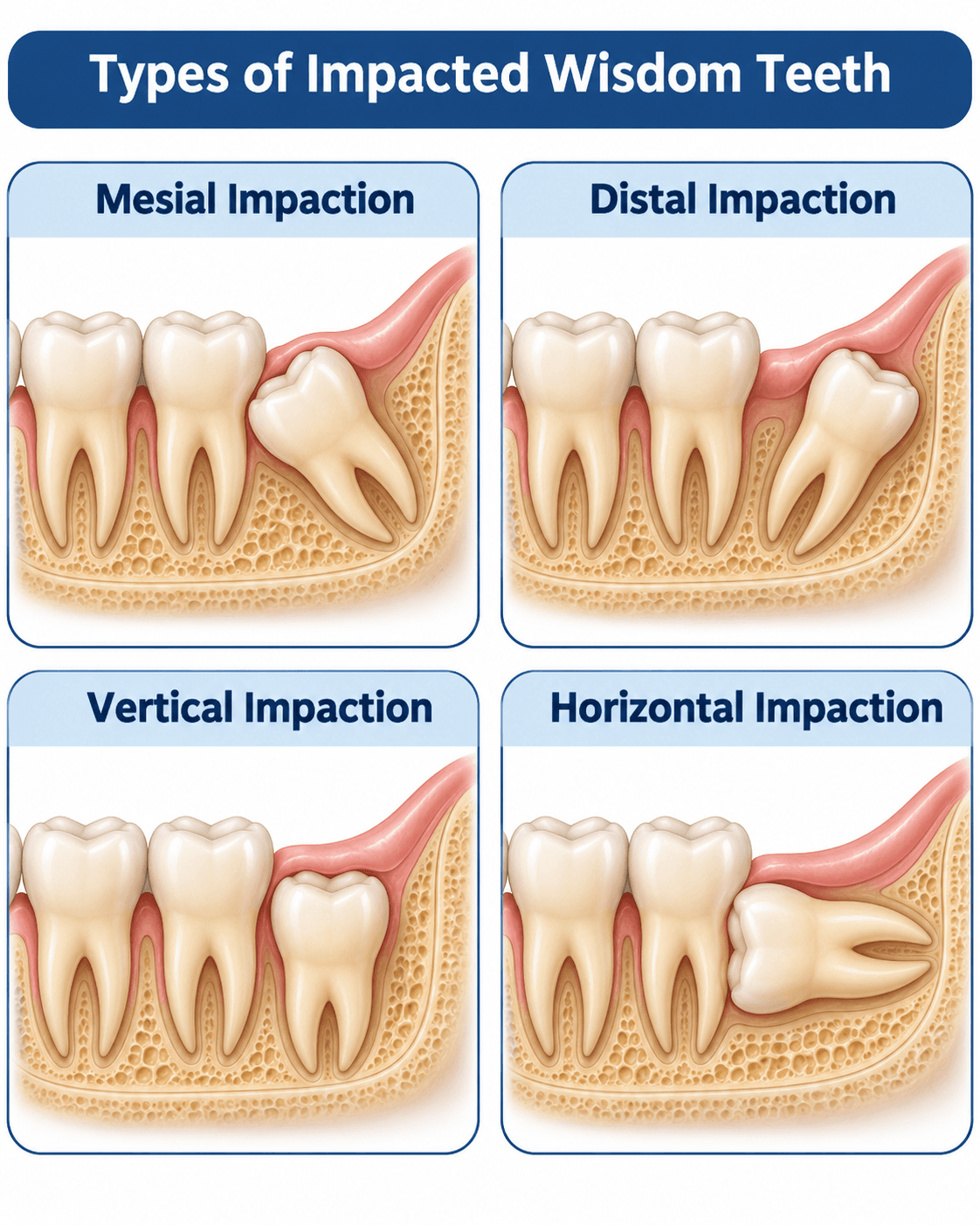
Dentists classify impacted wisdom teeth according to their position and direction of growth. Understanding these differences helps explain why some teeth are easier to remove than others.
Mesial Impaction
Mesial impaction occurs when a wisdom tooth tilts forward towards the second molar.
Depending on its position, the angled tooth may create an area where food and plaque accumulate. This can increase the risk of decay or gum problems affecting either tooth.
Distal Impaction
Distal impaction happens when the wisdom tooth tilts backwards, away from the second molar.
Its position may make cleaning difficult, especially when part of the tooth is covered by gum tissue. Whether removal is needed depends on the tooth’s condition and surrounding structures.
Vertical Impaction
A vertically impacted wisdom tooth grows in a relatively upright direction but remains unable to emerge completely.
Some vertically impacted teeth remain symptom-free and can be monitored. Others may cause discomfort or gum inflammation if they partially erupt.
Horizontal Impaction
A horizontal impacted wisdom tooth lies sideways within the jaw, often with its crown facing the neighbouring molar.
This position can make normal eruption difficult and may contribute to damage or decay around the second molar.
Horizontal impaction can also make extraction more complicated. Dentists use X-rays to assess the tooth’s position and determine whether surgery is appropriate.
Signs and Symptoms of Impacted Wisdom Teeth
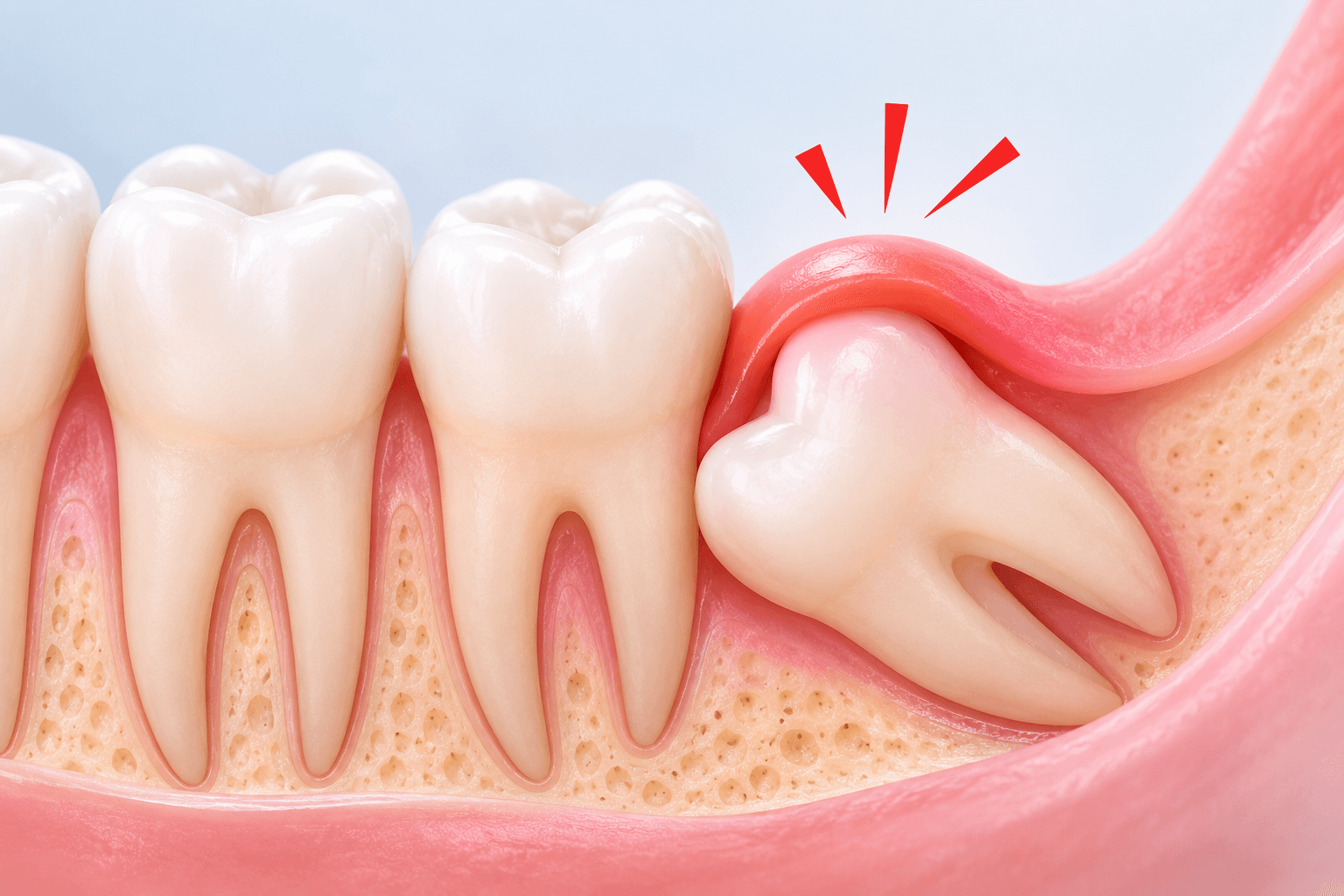
Impacted wisdom teeth do not always produce noticeable symptoms. However, certain changes around the back of your mouth may indicate that a tooth is causing problems.
Pain at the Back of the Jaw
Impacted wisdom tooth pain may feel like a dull ache or tenderness behind your last molar.
Discomfort can develop when the surrounding gums become inflamed or when decay or infection affects the area.
Pain may worsen while chewing or opening your mouth. However, jaw pain can have several causes, so a dental examination is needed to identify the problem.
Swollen or Tender Gums
Swelling around a partially erupted wisdom tooth is another common warning sign.
A flap of gum tissue may cover part of the tooth, allowing food particles and bacteria to collect underneath it.
This can cause redness, tenderness and discomfort during brushing or eating.
Signs of Wisdom Tooth Infection
An infected wisdom tooth or infected gum tissue around it may cause persistent pain, swelling, an unpleasant taste or bad breath.
One possible condition is pericoronitis, which occurs when the gum surrounding a partially erupted tooth becomes inflamed, often due to bacterial accumulation.
Other signs of wisdom tooth infection may include pus, difficulty opening your mouth or fever.
If you notice these symptoms, arrange a dental examination promptly. Increasing facial swelling, difficulty swallowing or difficulty breathing requires urgent medical attention because an infection may be spreading.
When Is Impacted Wisdom Tooth Removal Necessary?
Not every impacted wisdom tooth requires extraction. The decision depends on whether the tooth is causing disease, damaging nearby structures or presenting other clinical concerns.
Repeated Infection
Recurring episodes of pericoronitis may indicate that the area around a partially erupted wisdom tooth is difficult to keep clean. Removal may be recommended when the infection repeatedly returns or is particularly severe.
Tooth Decay or Damage to Nearby Teeth
An impacted wisdom tooth may be difficult to clean or may trap plaque against the second molar. If decay cannot be treated effectively, or the neighbouring tooth is being damaged, extraction may become necessary.
Persistent Pain or Other Dental Problems
Ongoing pain associated with an impacted wisdom tooth should be assessed. Surgery may be considered when examination and imaging confirm that the tooth is responsible for a problem that cannot be managed adequately through other treatment.
Cysts or Other Abnormalities
In some cases, a cyst may develop around an unerupted wisdom tooth. Your dentist will assess the condition and recommend appropriate treatment.
For impacted wisdom teeth that are healthy, symptom-free and not causing damage, regular monitoring may be a reasonable option.
How Are Impacted Wisdom Teeth Diagnosed?
A dentist usually begins by examining your gums, checking the area behind your second molars and discussing your symptoms.
Dental X-rays help reveal wisdom teeth that cannot be seen during a normal examination.
The images allow the dentist to assess the tooth’s position, surrounding bone, neighbouring molars and proximity to important structures such as nerves.
In certain complex cases, additional three-dimensional imaging may be recommended to support treatment planning.
These findings help determine whether the tooth should be monitored, treated or removed.
What Happens During Wisdom Tooth Extraction Surgery?
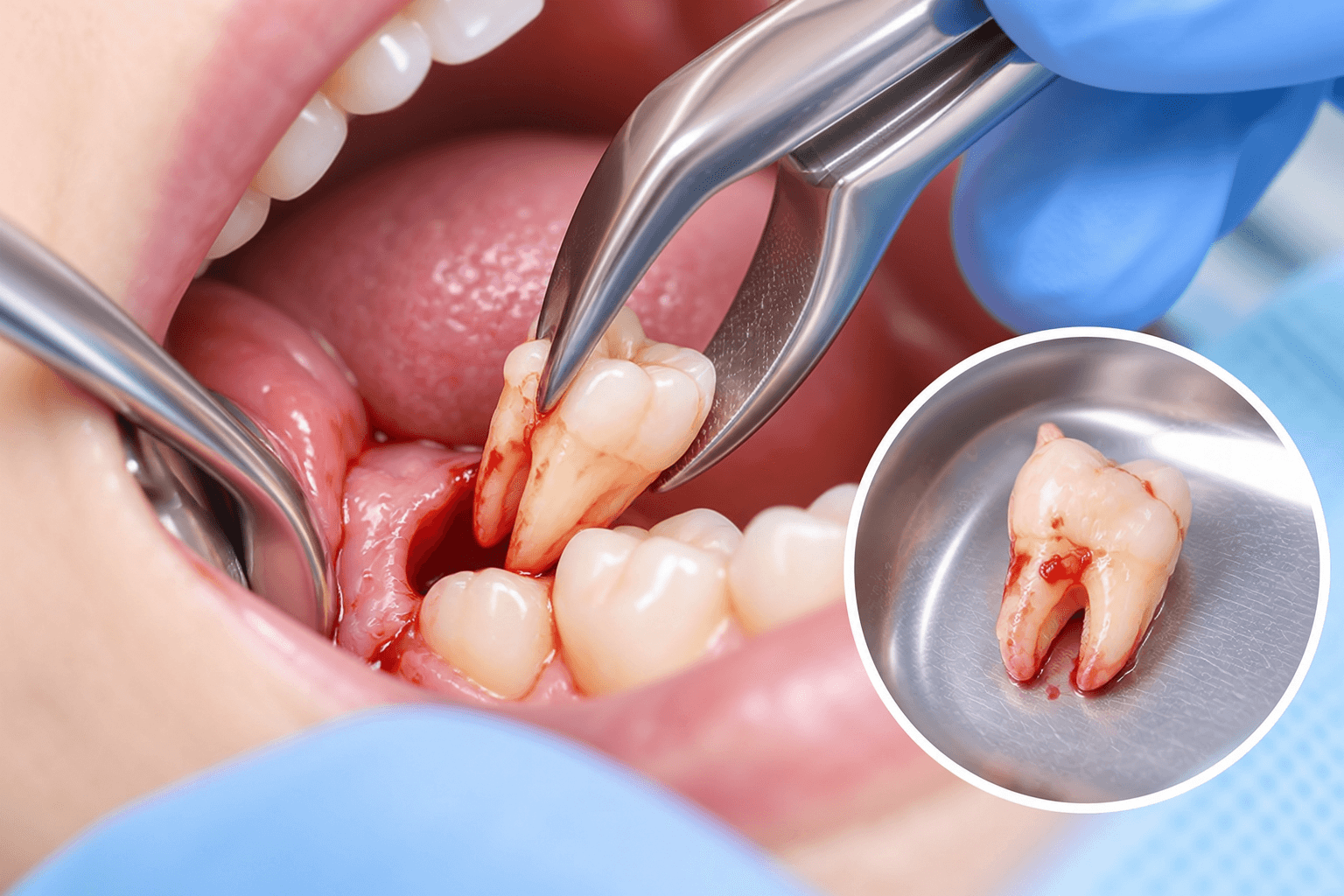
When an impacted tooth cannot be removed through a straightforward extraction, minor oral surgery for wisdom tooth removal may be required.
Before treatment, the dentist explains the procedure, expected recovery and possible complications. Local anaesthesia is commonly used to numb the treatment area.
During wisdom tooth extraction surgery, the dentist may make a small opening in the gum to access the impacted tooth. Depending on its position, some surrounding bone may need to be removed, or the tooth may be divided into smaller sections.
After extraction, the area is cleaned and stitches may be placed to support healing.
Surgical complexity varies between patients. Potential complications include bleeding, infection, dry socket and temporary or, less commonly, persistent changes in sensation from nerve injury.
An individual assessment helps determine the most suitable treatment approach.
Recovery and Aftercare
Some swelling, tenderness and mild bleeding can occur after wisdom tooth surgery. Discomfort is usually more noticeable during the first few days before gradually improving.
Follow your dentist’s instructions for medication, oral hygiene and eating. Soft foods may be more comfortable initially, and vigorous rinsing or disturbing the extraction site should be avoided during early healing.
Contact your dentist if bleeding persists, pain becomes increasingly severe or swelling worsens rather than improves.
For more information about treatment considerations and recovery, read our guide to wisdom tooth removal in Malaysia.


I had a wonderful experience at Enlight Dental! The staff and doctor were exceptionally friendly, caring, and professional. Since it was my very first time getting a wisdom tooth removed and I was dealing with severe toothache, I was quite anxious. However, their warm atmosphere and thoughtful treatment completely put my mind at ease. I am so grateful for their service and highly recommend this clinic to anyone!