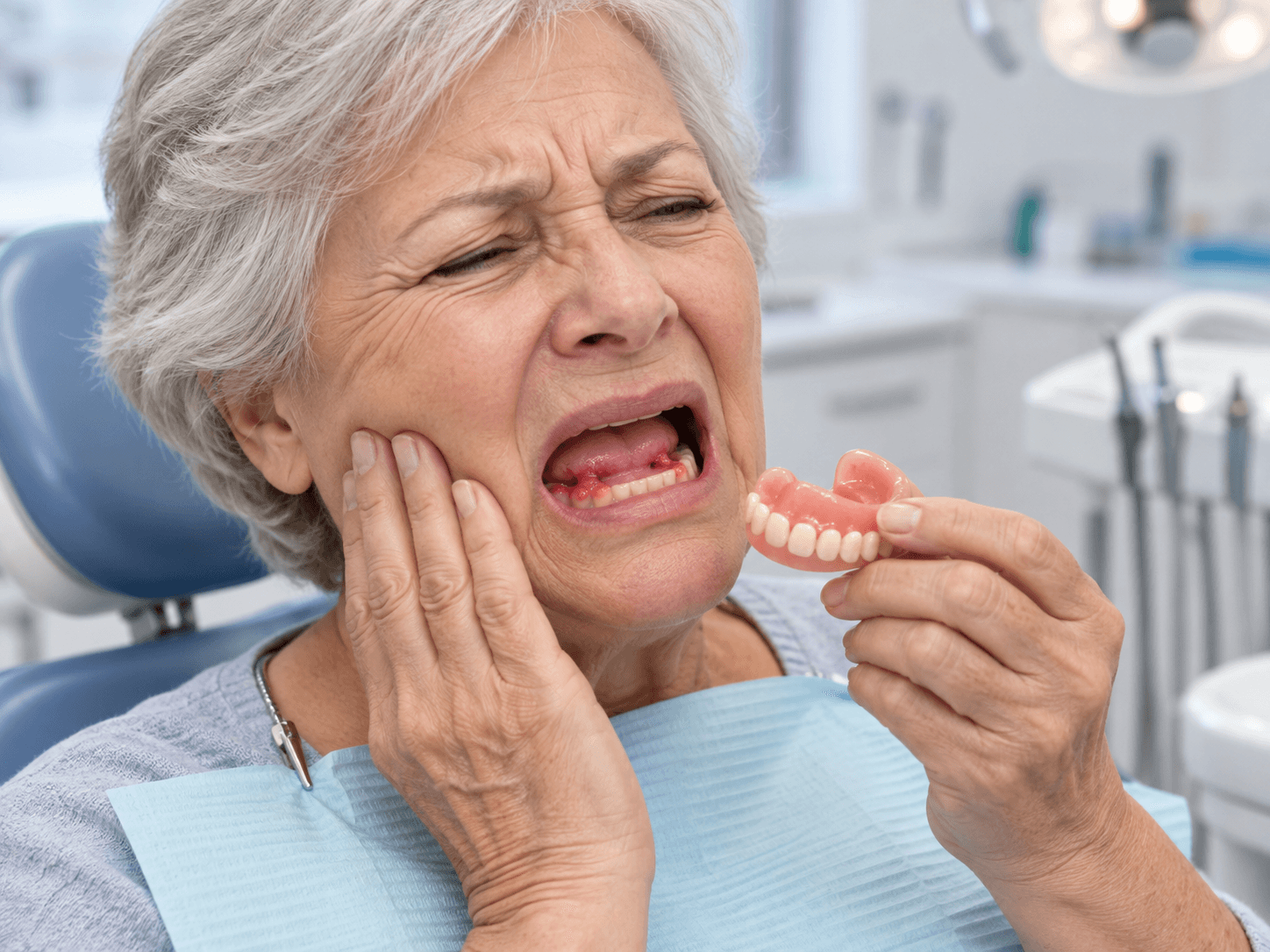
Dentures are meant to help you eat, speak and smile with confidence. When they hurt, they do the opposite. Many people put up with denture pain for months, assuming it is just part of wearing false teeth. Usually it isn’t.
The good news is that most denture problems can be fixed, often with a simple adjustment. Here’s how to tell what’s normal, what’s causing your discomfort, and when it’s time to see a dentist.
Is Some Denture Pain Normal?
Yes, at the start. When you first get new dentures, your gums, cheeks and tongue need time to get used to them. During the first few weeks, it’s common to notice small pressure spots, extra saliva, and slight changes in how you speak. Your dentist will usually schedule follow-up visits during this period to ease any areas that rub.
What isn’t normal is pain that stays the same or gets worse over time, a sore spot that keeps coming back in the same place, or discomfort with dentures you’ve worn comfortably for years. These usually point to one of the problems below.
7 Common Denture Problems That Cause Pain
Pressure Spots from New Dentures
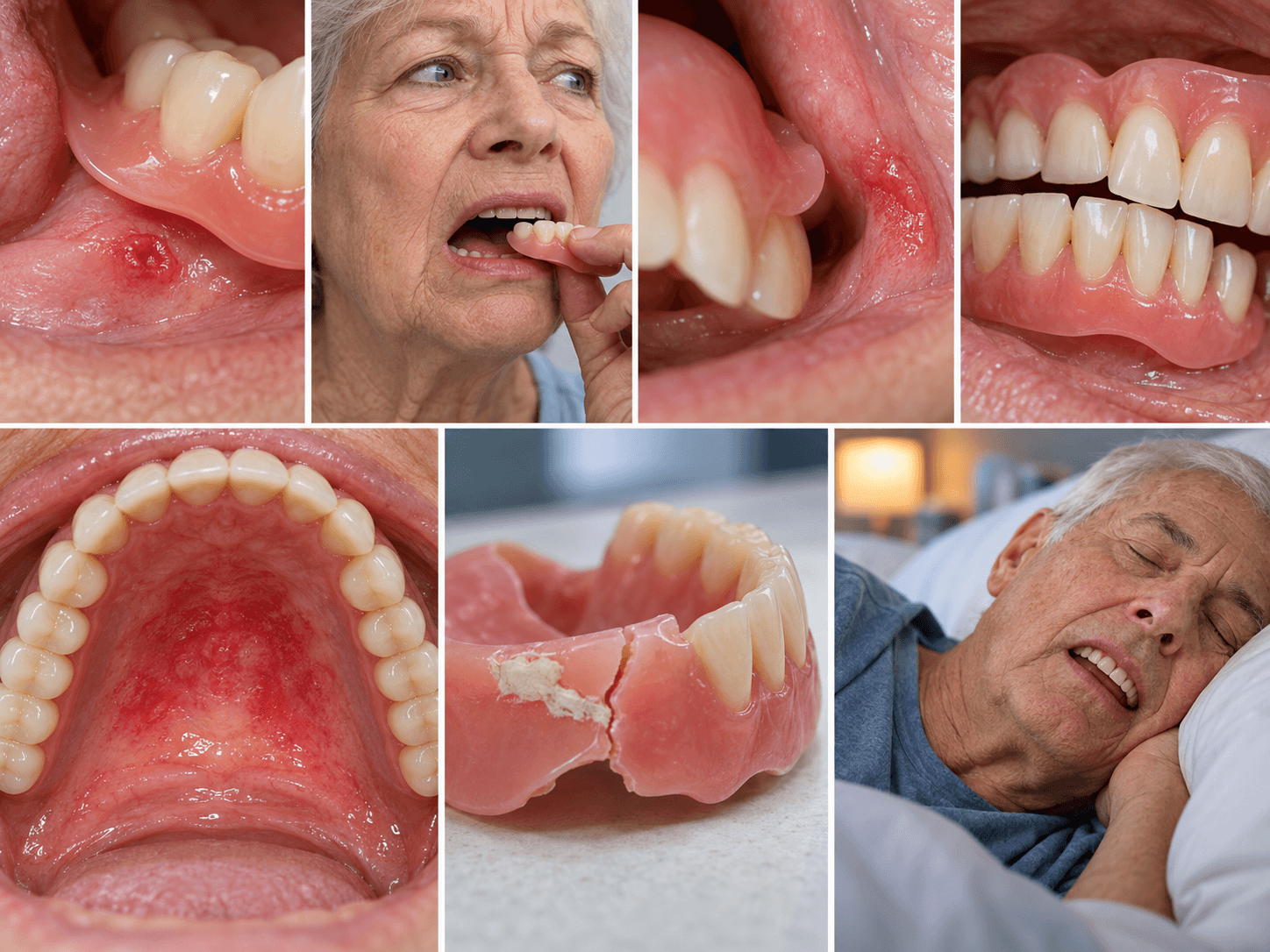
Even a well-made denture may press a little too firmly in one or two places when it is first fitted. Your gums are soft tissue, and a small area of extra pressure can quickly become tender. This is one of the most common reasons for denture pain in new wearers, and also one of the easiest to fix. A dentist can locate the pressure point and smooth it down in a short visit.
Dentures That No Longer Fit Properly
Your mouth changes after teeth are lost. The gum and jawbone that once supported your teeth gradually shrink over time, while your dentures stay the same shape. Eventually a gap forms between the denture and your gums.
A loose denture moves when you chew and talk, and that constant movement rubs against your gums. Many people notice their dentures feel fine for years, then slowly start causing soreness. Weight changes and ageing can also affect fit. If you find yourself relying more and more on denture adhesive, it is often a sign the fit has changed.
Rough or Overextended Edges and Denture Ulcers
If the edge of a denture is slightly too long, too sharp or rough, it can dig into the soft tissue of your gums, cheeks or the floor of your mouth. Over time this friction can cause a denture ulcer: a painful, open sore that often looks red or has a pale centre.
Denture ulcers usually appear in the same spot each time, right where the denture edge sits. Leaving the denture as it is means the sore keeps getting rubbed and struggles to heal. Smoothing or trimming the edge is usually all that’s needed.
An Uneven Bite
When your upper and lower dentures don’t meet evenly, some areas take more pressure than others every time you bite down. This can cause soreness in the gums, and sometimes aching in the jaw muscles or joints too. You may notice the pain more when eating, or find that your dentures tip or lift when you chew on one side. A dentist can check and rebalance the bite.
Denture Sore Mouth (Denture Stomatitis)
Denture stomatitis, often called denture sore mouth, is a common infection of the tissue underneath a denture. It is usually linked to a yeast called Candida, which can build up on dentures that aren’t cleaned thoroughly or are worn day and night.
It most often affects the roof of the mouth under an upper denture. The area may look red and inflamed, and some people feel a burning sensation, while others notice very little discomfort at all. Cracks at the corners of the mouth can sometimes appear alongside it. Treatment usually involves improving how the denture is cleaned, giving the gums time without the denture, and checking the fit. Your dentist may also recommend other treatments depending on what they see.
Cracked, Worn or Home-Repaired Dentures
Dentures wear down with daily use. Teeth can become flattened, the base can crack, and small chips can leave sharp edges. A cracked denture can also flex slightly when you bite, pinching the gums underneath.
It is tempting to fix a broken denture at home with superglue or a DIY repair kit, but this often makes things worse. Household glue is not designed for use in the mouth, and even a small mismatch in how the pieces line up can change the fit and create new sore spots. Most broken dentures can be professionally repaired.
Wearing Dentures Overnight
Your gums need time to rest. Wearing dentures 24 hours a day keeps constant pressure on the tissue and gives bacteria and yeast more opportunity to build up underneath. This raises the risk of soreness and denture stomatitis. Unless your dentist has advised otherwise, it is generally recommended to take your dentures out at night, clean them, and store them as instructed.
Warning Signs You Shouldn’t Ignore
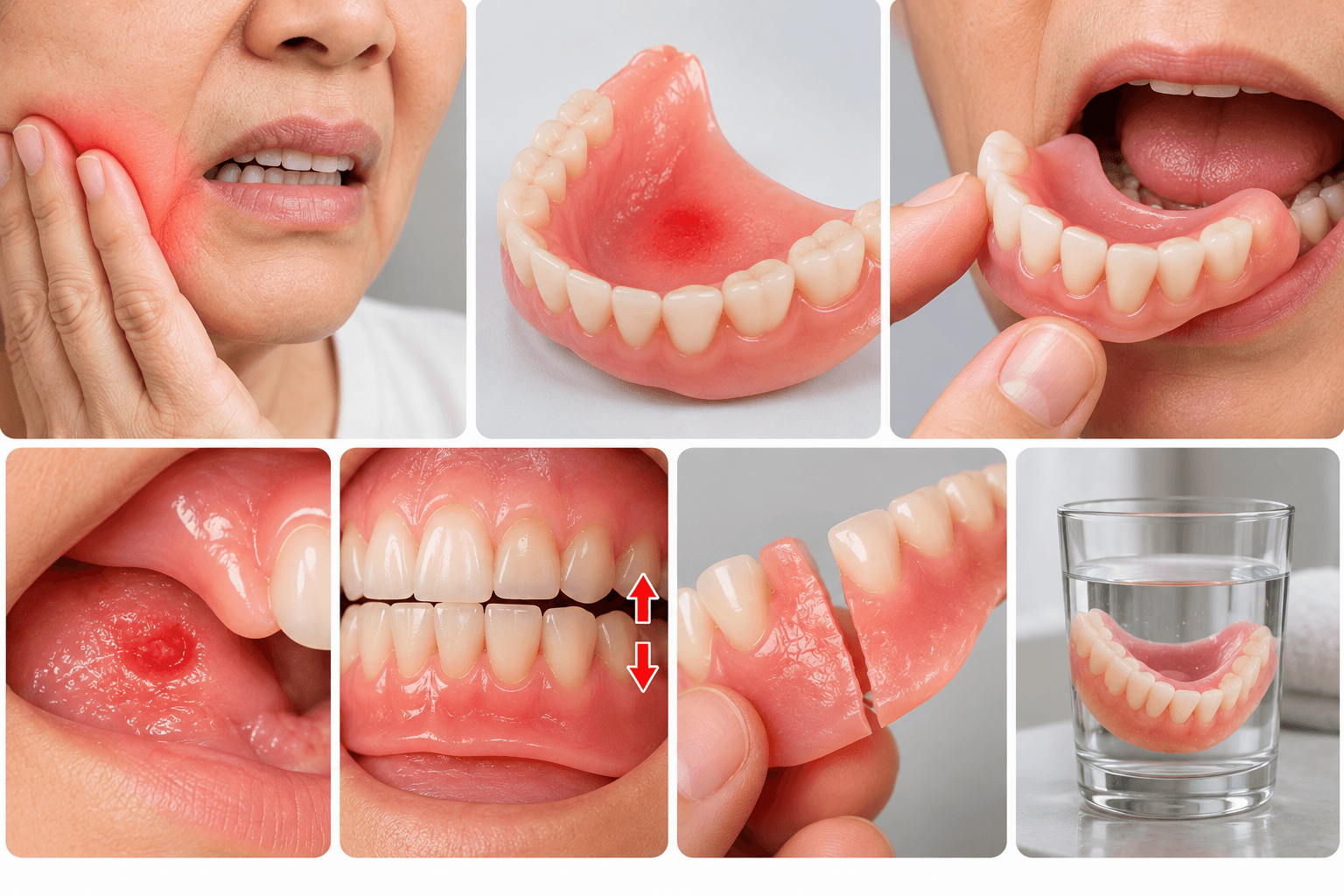
Some discomfort can wait for your next routine visit. These signs are worth getting checked sooner.
A Sore That Hasn’t Healed After Two Weeks
Most denture-related sores improve once the cause is dealt with. A sore or ulcer that hasn’t healed after about two weeks should always be examined by a dentist, even if it doesn’t hurt much. Most of the time it turns out to be simple irritation, but it’s important to rule out anything more serious.
Swelling, Bleeding or White and Red Patches
Gums that swell, bleed easily, or develop white or red patches under your denture may be a sign of infection or ongoing irritation that needs professional attention.
Avoiding Foods Because Chewing Hurts
If you’ve started cutting up all your food very small, skipping meals or avoiding foods you enjoy because chewing is painful, your dentures aren’t doing their job. This can affect your nutrition over time, especially in older adults.
Dentures That Keep Slipping
Dentures that drop, click or move when you talk or eat usually no longer fit properly. Adding more adhesive may help for a while, but it doesn’t fix the underlying problem.
If any of these sound familiar, it’s a good idea to book a denture check rather than wait.
What You Can Do at Home in the Meantime
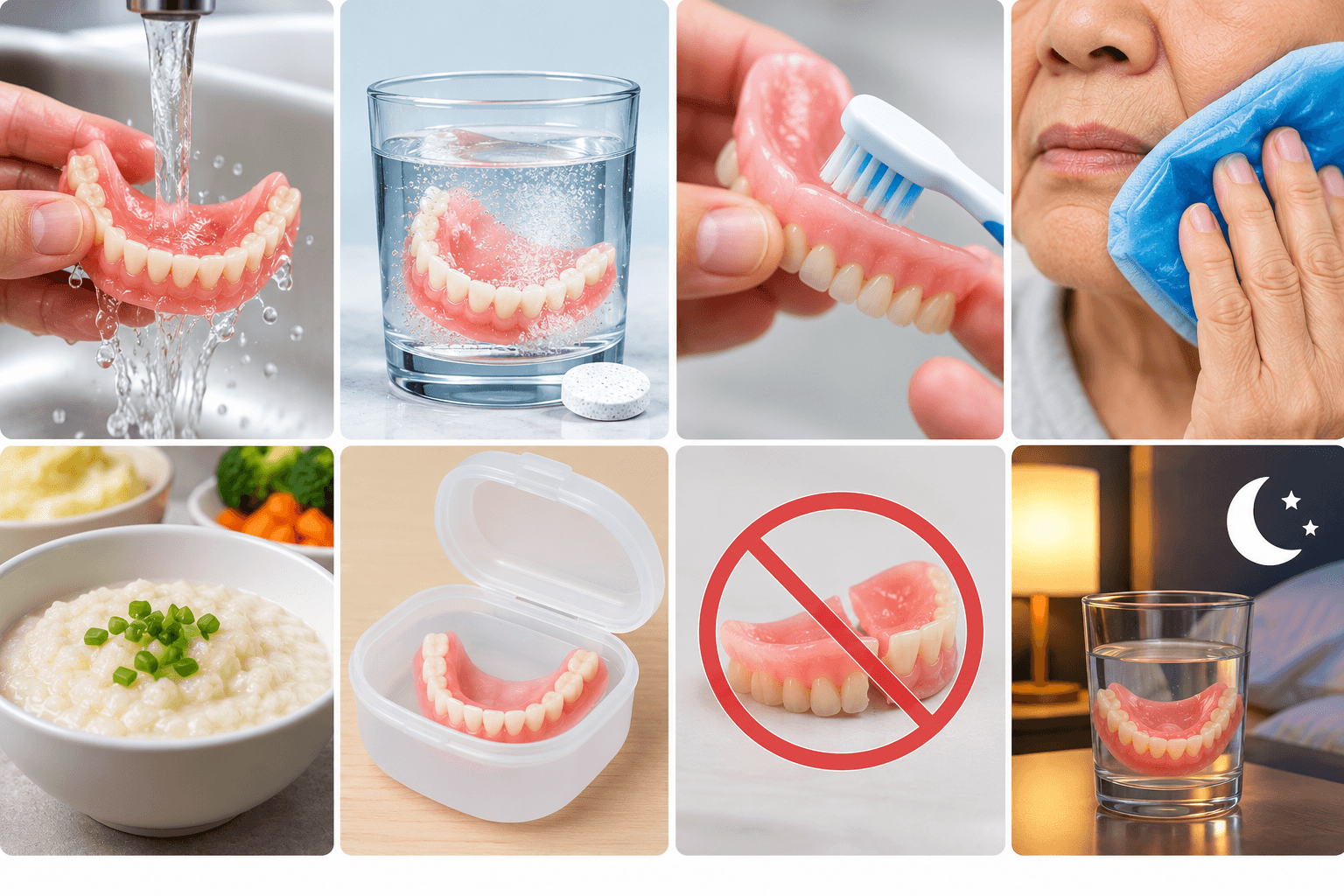
These steps can ease discomfort while you wait to see a dentist. They are not a replacement for fixing the cause.
Give Your Gums a Break
Take your dentures out for longer periods where you can, especially overnight, to reduce pressure on sore areas and let the tissue recover.
Rinse Gently with Warm Salt Water
Rinsing with warm salt water can help keep a sore area clean and feel soothing. Keep cleaning your gums, tongue and the roof of your mouth gently with a soft brush or clean, damp cloth.
Switch to Softer Foods
Soft foods like porridge, eggs, steamed fish and soups put less pressure on sore spots. Cut food into small pieces and try to chew on both sides at once to keep the denture steady.
Don’t Adjust or Glue Your Dentures Yourself
Filing, sanding or gluing your dentures at home can easily create new problems and may make a professional repair harder. If you need pain relief, speak to a pharmacist about what is suitable for you.
How a Dentist Fixes Denture Pain
The right fix depends on what’s causing the problem. After examining your mouth and dentures, your dentist may recommend one of the following.
Adjustment
For pressure spots, rough edges and minor bite issues, the dentist can smooth or reshape the denture in specific areas. This is often done in a single short visit and can bring quick relief.
Relining
When your gums and jawbone have changed shape, relining adds new material to the fitting surface of the denture so it matches the current shape of your mouth. This can restore a snug fit without making a whole new denture.
Repair
Cracks, fractures and broken teeth can usually be repaired professionally so the denture fits as it should.
Replacement
Dentures don’t last forever. If yours are badly worn, repeatedly loose or no longer fit even after relining, a new set may be the most comfortable long-term solution. Depending on your needs, options may include acrylic, flexible or metal-framed dentures. For people who struggle with loose dentures, your dentist may also discuss whether dental implants are an option.
You can find out more about the types of dentures available and how they’re made on our page on denture treatment at Enlight Dental.